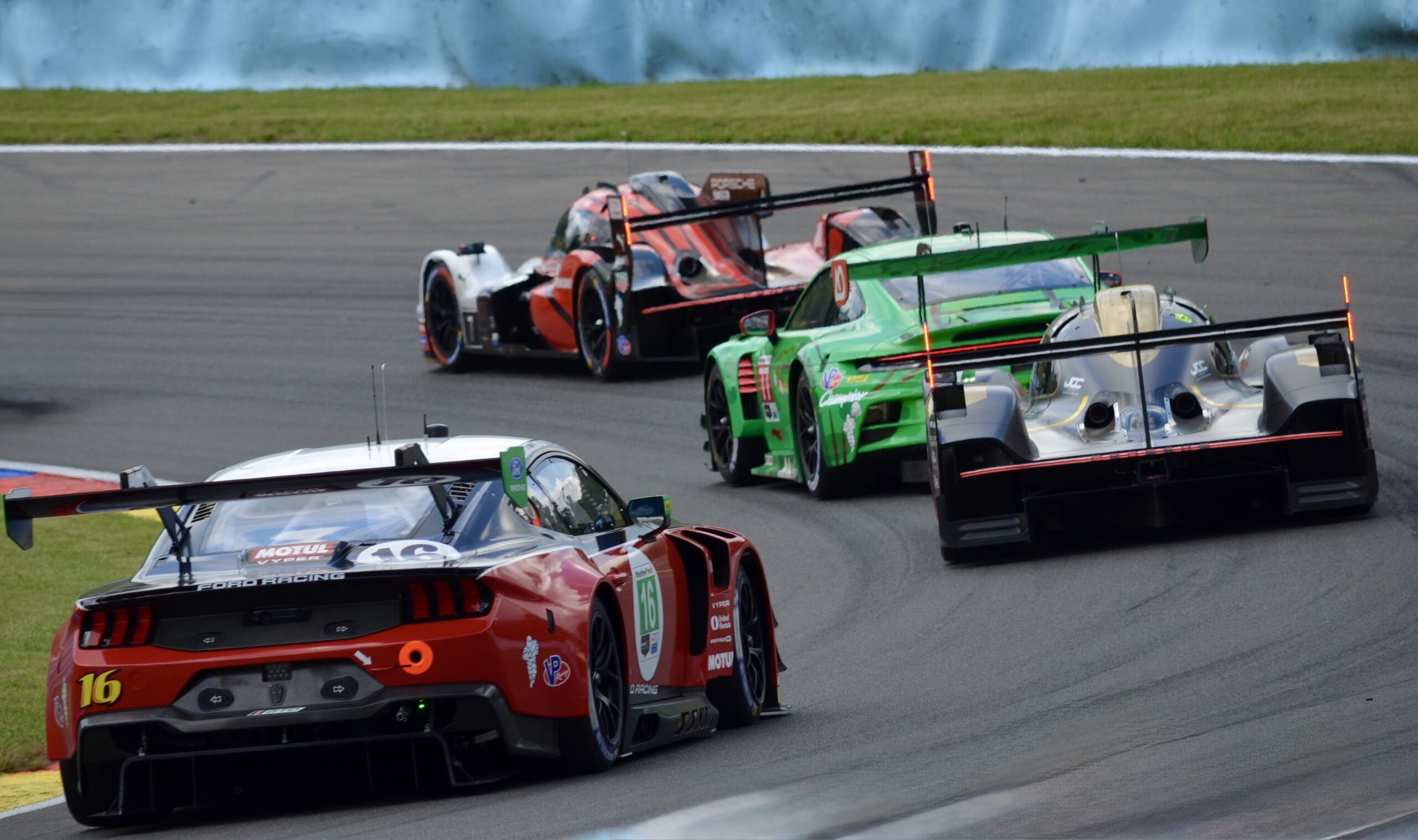
We’d first like to start this off by giving IMSA President John Doonan and IMSA their due credit because on the whole, a lot of the decisions and progress that has been made in the WeatherTech Championship series recently have largely been home runs.
We’re talking the decision to make Road America an endurance round, to the overall flow and handling of the fan experience at the track, to promoting and enhancing the content put out by IMSA on their social channels, highlighted by the amazing Win the Weekend series.
With all that said, there have been some hiccups recently – the feelings and grumbles about BOP always – and a few more that have dampened the immediate future of the grid, namely the either confirmed or expected departures of certain brands and teams, and the lack of commitment from the likes of Ford, McLaren and Genesis to submitting GTP entries at this point in time (even if blame can’t fall entirely on Doonan or IMSA’s shoulders for those specific happenings).
Enhancing the race-day experience by way of improving the oftentimes brutal yellow flag procedures is one of the last major bugaboos plaguing the flow of action for any given IMSA race. For both the fan at the venue and the fan that watches at home, when those double yellows come out, things can grind to an absolute halt and kill all the momentum of the cars battling on track, and it’s especially frustrating when the 20-minute procedure came about due to a tiny piece of carbon fiber that was detached from a bumper and is sitting in the racing line.
In the spirit of IMSA contiuinually looking to improve their product in any way they can, there may be hope after all for all of us.
According to a recent report from SportsCar365.com, IMSA are evaluating the implementation of a virtual safety car procedure or a ‘Code 60’ for local yellows for the WeatherTech series when potential short-period interventions arise, as was detailed by senior VP of competition Simon Hodgson.
Per SC365.com –
…One of the possible measures being explored is a virtual safety car, where competitors reduce speeds for short interventions, typically lasting one lap or less, which would allow for quick actions from corner workers, such as the cleanup of debris…It’s activated by the race director, with the specific timing transmitted to each car through radio and an on-board marshaling system, with cars’ speeds tracked by GPS monitors. Hodgson, however, wouldn’t confirm that any specific measure is under consideration at this time.
We’re talking those situations exactly – some debris on the racing line, a car that spun out that’s just waiting to fire back up and get rolling again, or anything else that could be considered small enough where a full course yellow + safety car intervention can be avoided.
SC365.com added that the new systems have already been tested by a select number of teams currently on the IMSA grid.
If the goal here is to the action on race-day, then there is very little drawback to introducing this system—or something like it—to the WeatherTech series. Just this season IMSA implemented a short-yellow variation for the beginning of races where if a flag comes out inside the first 30 minutes of the start of a race, or within 15 minutes of a restart, pit lane stays closed.
It’s way less painful when you’re at the track watching in person, as yellow-flag periods give you a chance to chillax, catch your breath, grab a drink, or even walk around to a new vantage point for the restart. But when you’re watching from your couch at home, it can be absolutely brutal to wait 15–20 minutes watching nothing happen as the entire 50-plus-car field goes through a wave-around process because the No. 70 Inception Racing Ferrari lost a side mirror going into Turn 3 almost a half hour previous.
IMSA, and Doonan, have claimed in the past that the delay of introducing this sort of tech to the series has been because of safety measures, namely how the AMR safety crews and track officials need to be protected during on-track cleanups. We’re not going to say that doesn’t need to be considered, but it’s maybe a bit disingenuous on IMSA’s part to make that claim when we know how much they and their parent owner NASCAR not-so-secretly love the presence of yellow flags in order to keep races tighter and – let’s be real – manufacture some more drama for instances where cars either get back on the lead lap or seeing a 40 second lead be wiped out back to a green flag restart.
We can also understand the difficulty of installing the technology at every track on the calendar, from Daytona to Long Beach to VIR, and to be sure that it works the way it should. You also have to consider that whatever it would be – new radios, new receivers, new transmitters, XYZ – that the teams may be responsible for the upgrade costs. To Doonan’s credit, he has always been conscious of budgets and financial costs for all teams before introducing any major changes to operations.
Either way – if IMSA can get this locked in starting as early as 2027 the overall benefits would be immense. Let’s make it happen.