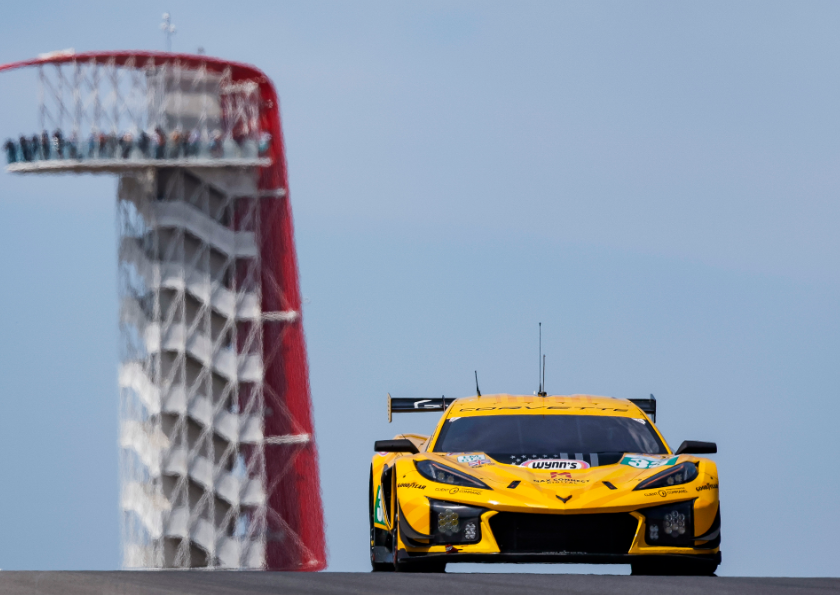
Back before the 2026 World Endurance Championship season began it was announced that the FIA and ACO would make substantial changes to how they handle their Balance of Performance matters.
First, they revealed that they would no longer disclose the per-race updates to the BOP tables leading into each race weekend. Second, they barred any driver, team or manufacturer from speaking publicly about the ratings between or during race weekends, and finally that they were also introducing a Success Ballast adjustment to Hypercars from race to race as well.
What they created was a transparency blackout, opting to pigeonhole the entire BOP conversation primarily because in their view “it’s super confusing,” while also attempting to eliminate teams and drivers (and fans for that matter) from making snide, sniping comments to the media in hopes of influencing ratings one way or the other.
The new approach has been successful in regards to the FIA’s goals, and as such, there’s been very little information regarding the ratings that each car on the grid is receiving on a race-to-race basis.
Not only that, things have been relatively positive for the 2027 season in the sense that we’re seeing razor-thin times submitted for Hyperpole sessions between both classes, and that there isn’t one car or team pulling away from the rest of the field and building insurmountable points leads in the standings.
Yet even still, there have been instances were you catch yourself looking sideways at a Hypercar or GT car struggling on the track and wondering if it’s because the tires aren’t quite warmed up yet, or if it’s because the car had 15% of it’s maximum energy output cut out from underneath it going into the weekend.
Coming out of the Lone Star Le Mans, we have maybe our first insight all season long as to how the FIA are handling matters, as John Dagys of SportsCar365.com reported that the No. 33 TF Sport Corvette of Jonny Edgar, Nicky Catsburg and Ben Keating carried a massive 36-kilogram Success Ballast addition for the six hour race.
For those residing Stateside, that is an 79.4-pound weight increase dumped onto their Corvette Z06 GT3.R.
Dagys did not disclose if the sister team No. 34 Racing Team Turkey by TF also carried the same Success Ballast for the weekend, but in reviewing the practice, qualifying and race performance of both cars we’re going to assume that it also suffered from the same weight increase.
For the No. 33, their best-finishing time for either of the three free practice sessions was P12 (FP2) while they finished P17 in the first qualifying session and missed out on advancing to Hyperpole.
After six hours of racing the No. 33 eventually finished P12 and outside of the points.
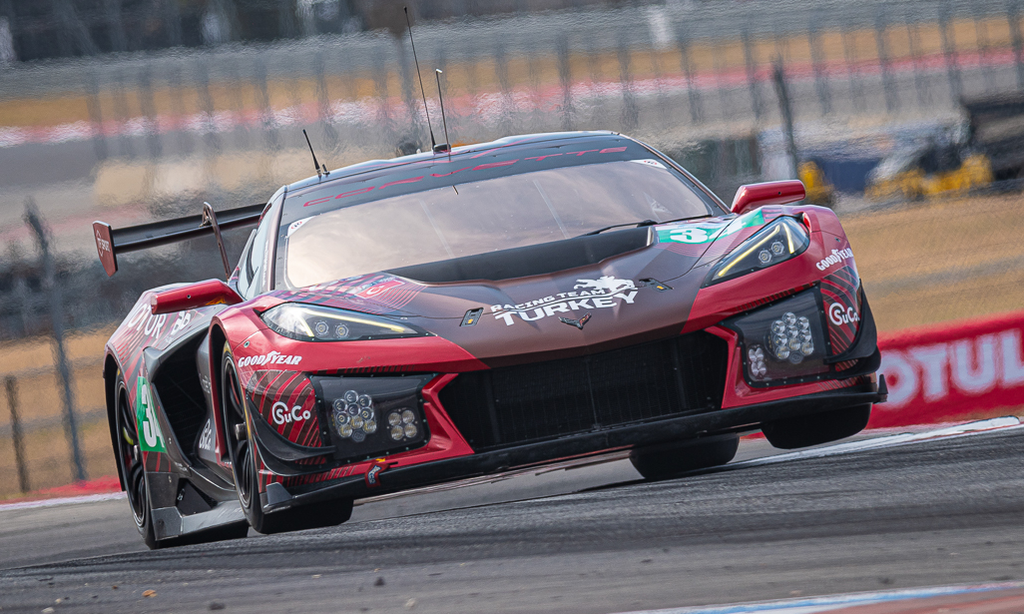
The No. 34 didn’t fare any better, actually even worse. They finished either dead last or second-to-last in all three free practice sessions, and although they fared better in qualifying by finishing P12, their race was one to forget with an eventual P14 finish, 3 laps down from the class-winning No. 27 Heart of Racing Aston Martin, although the car did suffer from some slight steering damage that affected their day.
As we will remember, the No. 33 yellow-liveried Corvette conquered Le Mans back in June, while the red and black No. 34 of Peter Dempsey, Charlie Eastwood and Salih Yoluç won the following race on the schedule at Interlagos in July.
The entire conversation and digestion of the BOP format really took a nose dive last year when Ferrari and their 499P put in a dominate performance throughout the season, highlighted by a third-straight Le Mans victory, the Drivers’ title for the No. 51, an end-of-season podium sweep for all three entries on the grid and a Manufacturers’ championship 74 points clear of Toyota.
Instead of opting for more transparency in their decision-making process, the FIA and ACO chose to keep all of their adjustments in-house, and if we’re being honest the entire BOP discussion blows no matter how you slice it, and there will never be a perfect formula to appease everyone involved in any sport on the planet. It’s over-talked about and too easy to point at if trying to explain a lack of results for any team on the grid that doesn’t win the race.
At the same time, these kinds of massive swings back and forth where a podium finish or win means you’re going to get absolutely tanked with an insane weight increase the next time out is also not how we want this thing to go. Specific to the Success Ballast, it goes beyond a simple adjustment of power output in the Stage 1 or Stage 2 segments by a couple of percentage points here or there. A ballast increase of 80 pounds is absurd. Why not make it 50 pounds? Or 35?
There is no graph or data chart on the planet that you could show us to make the argument that an 80-pound weight increase is going to give any team a good shot at competing.
Overall, we understand the need for BOP and the fact that this series wouldn’t be what it is if it weren’t there in the first place. The current brands competing in the WEC all know the deal when it comes to being on the potential receiving end of a difficult power or weight adjustment.
The problem we have is with these sort of instances where there are massive pendulum swings that seemingly go way too far and hamstring teams from having a shot at racing for a good result.
If you’re the Heart of Racing right about now you better hope and pray the FIA goes easy on you for Fuji.
(photos via FIAWEC.com and DailySportsCar.com)