Tag: wec

  • Report: No. 33 TF Sport Corvette Carried 80-Pound Success Ballast At Lone Star Le Mans

    Report: No. 33 TF Sport Corvette Carried 80-Pound Success Ballast At Lone Star Le Mans

    Back before the 2026 World Endurance Championship season began it was announced that the FIA and ACO would make substantial changes to how they handle their Balance of Performance matters.

    First, they revealed that they would no longer disclose the per-race updates to the BOP tables leading into each race weekend. Second, they barred any driver, team or manufacturer from speaking publicly about the ratings between or during race weekends, and finally that they were also introducing a Success Ballast adjustment to Hypercars from race to race as well.

    What they created was a transparency blackout, opting to pigeonhole the entire BOP conversation primarily because in their view “it’s super confusing,” while also attempting to eliminate teams and drivers (and fans for that matter) from making snide, sniping comments to the media in hopes of influencing ratings one way or the other.

    The new approach has been successful in regards to the FIA’s goals, and as such, there’s been very little information regarding the ratings that each car on the grid is receiving on a race-to-race basis.

    Not only that, things have been relatively positive for the 2027 season in the sense that we’re seeing razor-thin times submitted for Hyperpole sessions between both classes, and that there isn’t one car or team pulling away from the rest of the field and building insurmountable points leads in the standings.

    Yet even still, there have been instances were you catch yourself looking sideways at a Hypercar or GT car struggling on the track and wondering if it’s because the tires aren’t quite warmed up yet, or if it’s because the car had 15% of it’s maximum energy output cut out from underneath it going into the weekend.

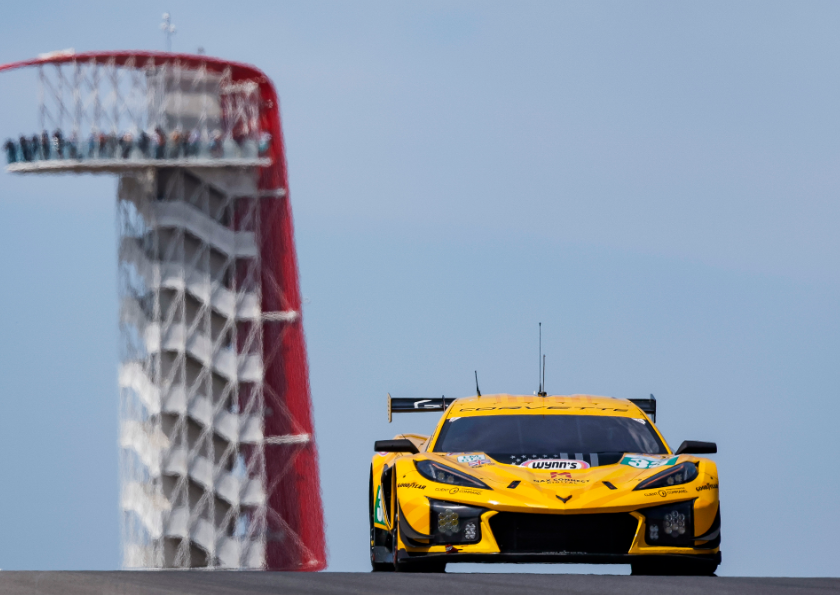
    Coming out of the Lone Star Le Mans, we have maybe our first insight all season long as to how the FIA are handling matters, as John Dagys of SportsCar365.com reported that the No. 33 TF Sport Corvette of Jonny Edgar, Nicky Catsburg and Ben Keating carried a massive 36-kilogram Success Ballast addition for the six hour race.

    For those residing Stateside, that is an 79.4-pound weight increase dumped onto their Corvette Z06 GT3.R.

    Dagys did not disclose if the sister team No. 34 Racing Team Turkey by TF also carried the same Success Ballast for the weekend, but in reviewing the practice, qualifying and race performance of both cars we’re going to assume that it also suffered from the same weight increase.

    For the No. 33, their best-finishing time for either of the three free practice sessions was P12 (FP2) while they finished P17 in the first qualifying session and missed out on advancing to Hyperpole.

    After six hours of racing the No. 33 eventually finished P12 and outside of the points.

    The No. 34 didn’t fare any better, actually even worse. They finished either dead last or second-to-last in all three free practice sessions, and although they fared better in qualifying by finishing P12, their race was one to forget with an eventual P14 finish, 3 laps down from the class-winning No. 27 Heart of Racing Aston Martin, although the car did suffer from some slight steering damage that affected their day.

    As we will remember, the No. 33 yellow-liveried Corvette conquered Le Mans back in June, while the red and black No. 34 of Peter Dempsey, Charlie Eastwood and Salih Yoluç won the following race on the schedule at Interlagos in July.

    The entire conversation and digestion of the BOP format really took a nose dive last year when Ferrari and their 499P put in a dominate performance throughout the season, highlighted by a third-straight Le Mans victory, the Drivers’ title for the No. 51, an end-of-season podium sweep for all three entries on the grid and a Manufacturers’  championship 74 points clear of Toyota.

    Instead of opting for more transparency in their decision-making process, the FIA and ACO chose to keep all of their adjustments in-house, and if we’re being honest the entire BOP discussion blows no matter how you slice it, and there will never be a perfect formula to appease everyone involved in any sport on the planet. It’s over-talked about and too easy to point at if trying to explain a lack of results for any team on the grid that doesn’t win the race.

    At the same time, these kinds of massive swings back and forth where a podium finish or win means you’re going to get absolutely tanked with an insane weight increase the next time out is also not how we want this thing to go. Specific to the Success Ballast, it goes beyond a simple adjustment of power output in the Stage 1 or Stage 2 segments by a couple of percentage points here or there. A ballast increase of 80 pounds is absurd. Why not make it 50 pounds? Or 35?

    There is no graph or data chart on the planet that you could show us to make the argument that an 80-pound weight increase is going to give any team a good shot at competing.

    Overall, we understand the need for BOP and the fact that this series wouldn’t be what it is if it weren’t there in the first place. The current brands competing in the WEC all know the deal when it comes to being on the potential receiving end of a difficult power or weight adjustment.

    The problem we have is with these sort of instances where there are massive pendulum swings that seemingly go way too far and hamstring teams from having a shot at racing for a good result.

    If you’re the Heart of Racing right about now you better hope and pray the FIA goes easy on you for Fuji.
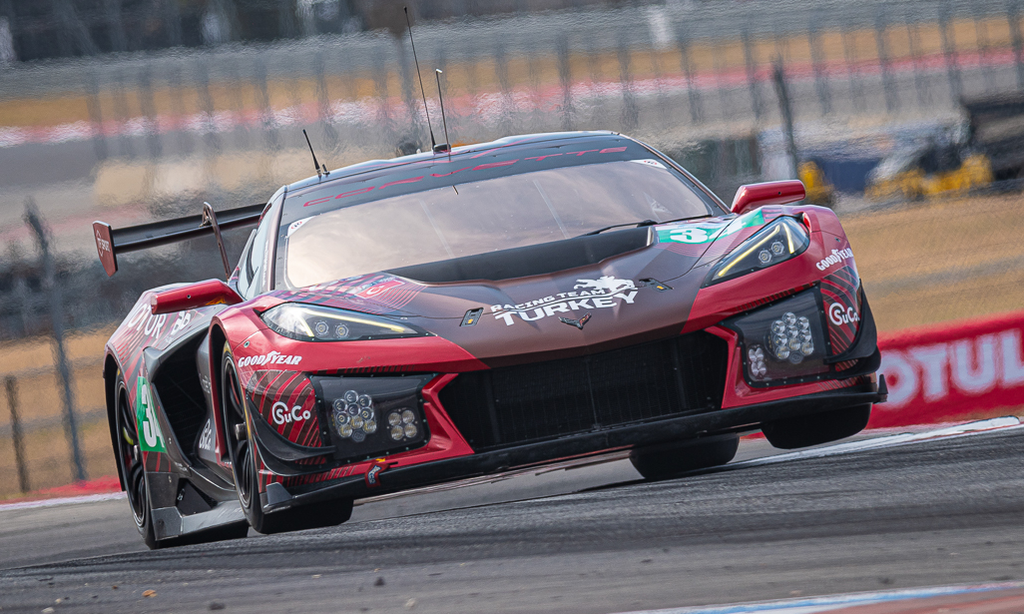
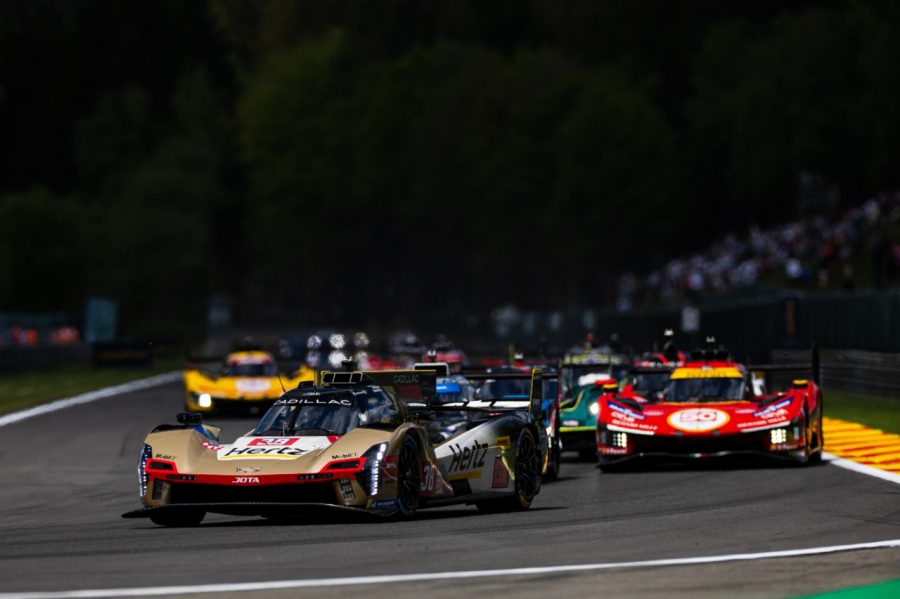
    (photos via FIAWEC.com and DailySportsCar.com)
  • Holding Pattern For WEC Title Contenders Following Lone Star Le Mans, Fuji Next Up

    Holding Pattern For WEC Title Contenders Following Lone Star Le Mans, Fuji Next Up

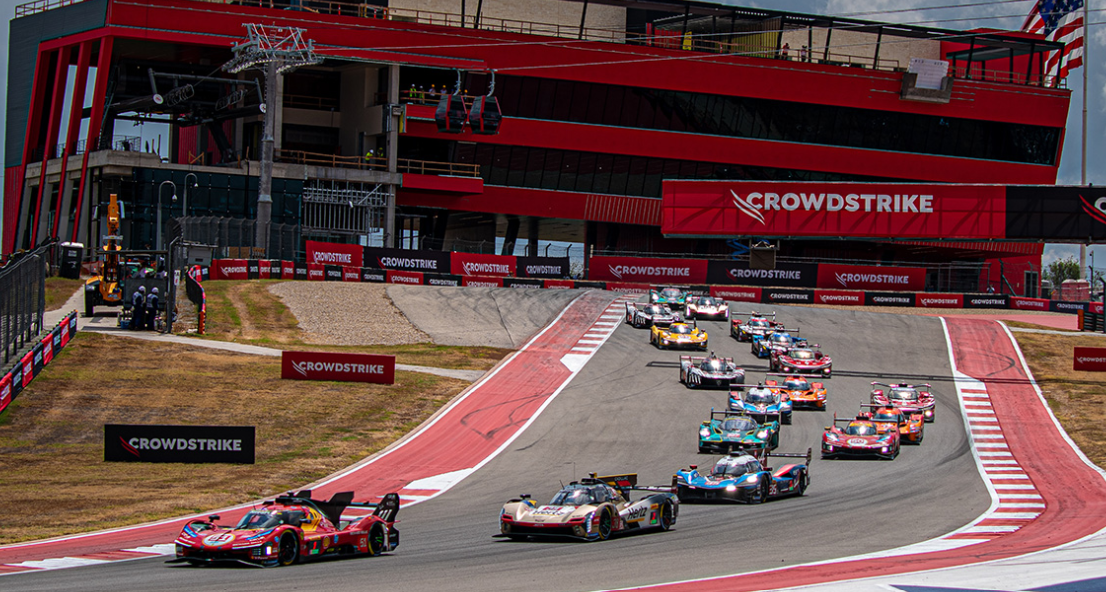
    The Lone Star Le Mans was overall a very solid race by any motorsport standard, an almost business-as-usual event for the majority of the six hours of action, with the occasional super-annoying safety car procedure to bog things down at times.

    The race was unique in the sense that the finishing order for both Hypercar and LMGT3 was such that essentially all of the major players for the championship titles were left stuck in a Mexican standoff, with dry powder locked in their guns, ready to aim and fire again next time out at Fuji in two weeks’ time.

    For Hypercar, the dramatic late-game hydraulics failure of the No. 7 Toyota TR010 with Nyck de Vries behind the wheel was truly a shocking moment that seemingly only the WEC can manage to produce at this kind of gut-wrenching level. There’s just something about racing for hours on end, seeing the checkered flag in your sights, and then suffering a cataclysmic breakdown that snatches defeat from the jaws of victory and is so amazingly painful to see happen, especially if you’re a fan for that team.

    With the No. 7 biting the dust and dropping from P1 all the way down to the basement and a quick race retirement, coupled with the No. 20 BMW of Robin Frijns, René Rast and Sheldon van der Linde being left to struggle all weekend to run at the front of the pack, a P12 finish for the Belgian outfit meant that there was no change at the top of the Hypercar points standings once all was said and done.

    For the Drivers’ title, it’s still Frijns and Rast in first with 75 points, tied with de Vries, Mike Conway and Kamui Kobayashi at 75 – count ’em – 75 points.

    The sister car No. 8 TR010 did make up some ground with their P6 result, as the trio of Sébastien Buemi, Brendon Hartley and Ryo Hirakawa now sit fourth in the standings with 64 points, one point behind Sheldon van der Linde by himself for third (thanks to the rescheduled Long Beach/Imola clash back in April).

    A P11 finish came with a pretty massive pit lane blunder for the No. 51 Ferrari of James Calado, Antonio Giovinazzi and Alessandro Pier Guidi, which saw them squander their pole-winning pace and overall ability to challenge for the win, leaving them to settle in fifth in the standings. Meanwhile the No. 20 BMW of Kevin Magnussen, Raffaele Marciello and Dries Vanthoor followed up their maiden victory at Interlagos with a P8 finish, giving them and the brand four points on the scorecard to help their efforts slightly.

    The race-winning No. 50 Ferrari of Antonio Fuoco, Miguel Molina and Nicklas Nielsen got a major boost to their own championship aspirations and now sit seventh in the standings with 54 points to their efforts…

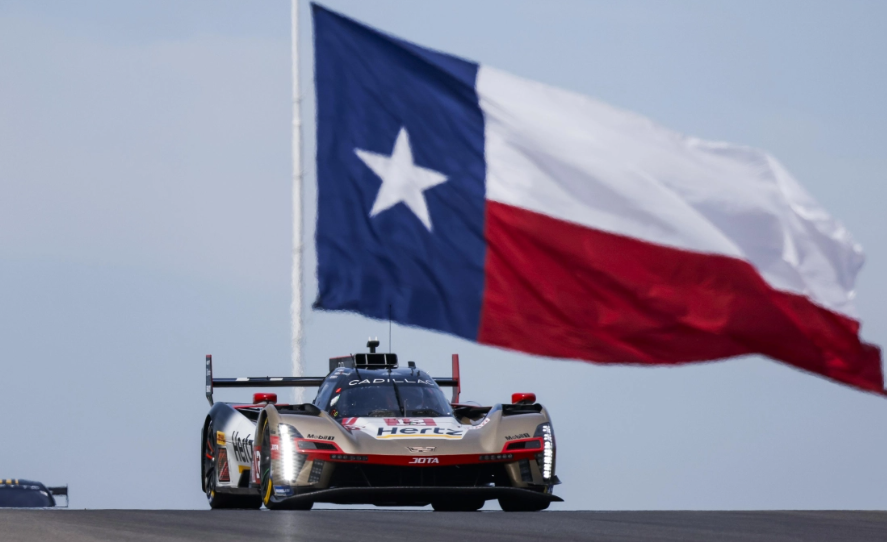
    And in an illustration of just how damaging race retirements can be in a championship like this, the P2 finish from the No. 38 Cadillac Hertz Team Jota of Jack Aitken, Earl Bamber and Norman Nato earned 18 points from their result and more than doubled their points total thus far in the season.

    The No. 38 suffered major punches-in-the-nuts at Spa and Le Mans, and damn would things be looking quite different if those breaks hadn’t gone against them in those instances.

    That half of the Jota operation now sit P11 in the Drivers’ standings with 34 points (Aitken also missed the round at Imola for IMSA duties, giving him 30 points).

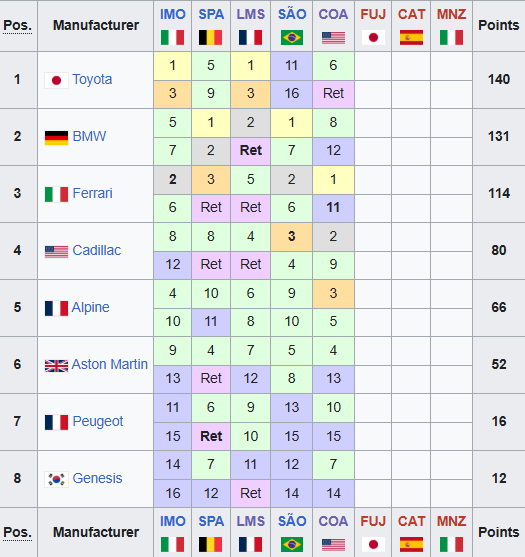
    The way the results settled, there was more movement in the Manufacturers’ title fight with Toyota now holding a nine point lead over BMW, followed by Ferrari to round out the top before a larger drop down to Cadillac in fourth.

    For LMGT3, the scene was nearly identical to Hypercar in the sense that the podium finishers had a great day to write home about, but the top two title contenders in the No. 33 TF Sport Corvette (P12) and the No. 92 Bend Manthey Porsche (P15) both were unable to build on their totals, finishing outside of the top 10.

    According to SportsCar365.com, the Corvette’s received a 36kg Success Ballast adjustment following the last race out at Interlagos; the sister car No. 34 Racing Team Turkey by TF finished P14 at COTA (perhaps carrying around those extra 80 POUNDS!!!!!!! had something to do with it?).

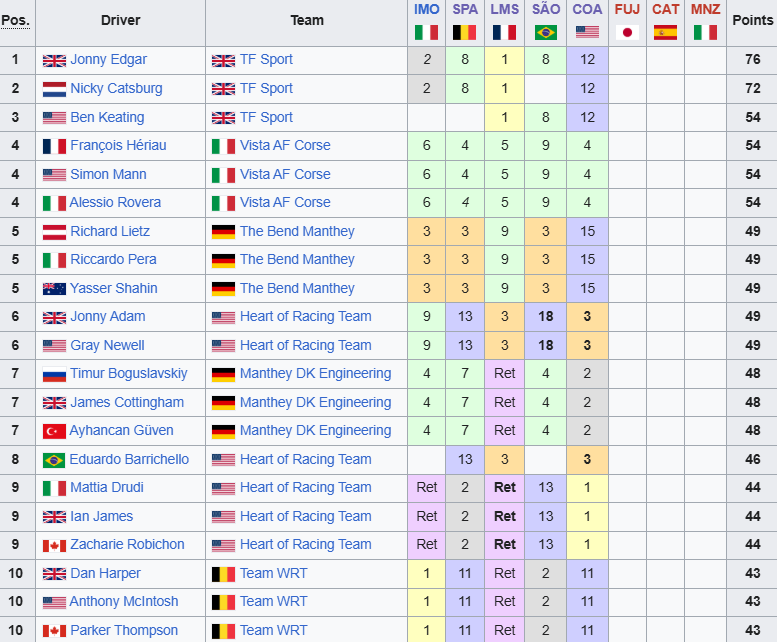
    The top of the standings is still occupied by all three TF Sport Corvette drivers separately, as the jumbled bits see of Jonny Edgar (P1, 76 points) Nicky Catsburg (P2, 72 points) and Ben Keating (P3, 54 points) settling in at first, second and third individually.

    The big winners were of course Aston Martin and the dual-car Heart of Racing effort in bagging a double-podium result from the race-winning No. 27 (Mattia Drudi, Ian James and Zacharie Robichon) and the third-place finisher No. 23 (Jonny Adam, Kobe Pauwels and Gray Newell).

    In another noticeable, almost under-the-radar type move of the day, it was the No. 21 Vista AF Corse Ferrari of François Hériau, Simon Mann and Alessio Rovera that finished fourth and managed to leap up the standings and now currently occupy the space behind the Fractured TF Sport Contingent.

    Their Ferrari 296 GT3 Evo has finished inside the top 10 for all five races thus far in the season, and although it wasn’t a podium result, this stretch of consistency has brought 54 points to their scorecard and absolutely brings them into the championship fight.

    The rest of the top 10 in the LMGT3 fight are as shown –

    (featured photo via DailySportsCar.com)

  • Report: Cadillac Pushing To Field Same IMSA/WEC Driver Lineups In 2027

    Report: Cadillac Pushing To Field Same IMSA/WEC Driver Lineups In 2027

    As we enter what could be labeled the “second half” of this heavily modified 2026 WEC season with the Lone Star Le Mans in Austin, there is still the opportunity to look ahead to next season and forecast some of the potential changes that could be coming for teams across the grid.

    The rumors have continued to grow this weekend down at COTA, and a new report indicates that through the initiation of Cadillac Racing, both Wayne Taylor Racing and Hertz Team Jota are prepping for a reworking of their driver lineups for 2027, with the focus being a unified roster between the two teams in both IMSA and the WEC

    As Stephen Lickorish of SportsCar365.com put it pretty clearly, Cadillac’s aim for the V-Series.R is to “field the same drivers in both the WEC and the IMSA WeatherTech SportsCar Championship,” which came in response to the news of Sebastian Bourdais’ coming exit from Team Jota.

    Bourdais himself confirmed the news, remarking that Cadillac’s push to unify their lineups in a ‘One Cadillac’ approach across both competitions starting next season “kind of puts me out of a job.”

    The Frenchman has been quite frank about his future in the last two weeks or so in speaking to multiple media outlets and getting it on the record that although he is set to exit the Hypercar ranks at the end of the year, he has no plans of retiring or moving on from the highest levels of sportscar racing.

    So, we know that Bourdais is already departing from the frame, and it appears that another Jota driver will be moving on as well – Alex Lynn.

    SC365.com added that in addition to Bourdais, the 32-year-old Lynn is prepared to move on from HTJ at the end of the season with a move to McLaren understood to have been agreed to in principle at this time.

    Current Peugeot driver Malthe Jakobsen is also believed to be going with Lynn to McLaren, giving the British marquee four drivers out of six needed for their debut of the MCL-HY, with the original confirmations of Mikkel Jensen and Laurens Vanthoor already previously revealed by the brand.

    A lingering neck injury and the lengthy recovery process has forced Lynn to miss what will be the first six rounds of the WEC season, with his projected return for the final two rounds at Monza and Barcelona set to come.

    Due to Lynn’s injury and the revised schedule from the conflict in the Middle East, we’ve seen Cadillac and HTJ look to the services of Louis Deletraz for the rounds at Spa and Le Mans, while Ricky Taylor is set for his Jota debut this weekend. It appears that the presence of Ricky Taylor, and for that matter Deletraz, could be more than just guest appearances.

    SC365.com reported that Taylor is “likely” to race with Jota full-time in 2027, and due to the fact that although there are some close calls with races being held on consecutive weekends next season, as far as GTP/Hypercar clashes are concerned, there is currently no race weekend in 2027 where prototypes in IMSA will race on the same weekend as any WEC round.

    If WTR and Jota were to unify their driver lineups, it would be a repeat of what BMW and Team WRT opted for in 2026 when they implemented a much more synchronized effort between their entries in both series as WRT took over the GTP program from Team RLL.

    And just like how BMW dealt with a lack of results from previous seasons, the synergized effort would come after a period of missed chances for both Wayne Taylor Racing in IMSA and Jota in the WEC, most recently the missed opportunities at Spa, Le Mans and Interlagos to bring home landmark victories due to errors suffered via driver penalties, hiccups during pit stop sequences or misjudgments on race strategy.

    Is a combined effort in the cards for Cadillac, WTR and Team Jota? (photo via Motorsport Media Hub)

    If it’s (at least) Bourdais and Lynn out and Ricky Taylor in, the next question to ask is who else will remain on the roster between the teams, and who else could see themselves dropped?

    For the Lone Star Le Mans, the No. 12 car will see Norman Nato, Will Stevens and Ricky Taylor group up, while the No. 38 will have their usual trio of Earl Bamber, Sebastian Bourdais and Jack Aitken.

    Perhaps the No. 12 car would remain the same, leaving the machinations of the No. 38 to be fully reworked considering that Action Express Racing are returning to Le Mans next season in the place of Wayne Taylor’s entry, and with Bamber and Aitken serving as the dynamic duo of the No. 31 in IMSA maybe they would pass on racing for both Cadillac teams in 2027.

    The drawback in that scenario however is seeing arguably two of the best prototype drivers going right now in Aitken and Bamber depart their driver stables to be replaced, so would the alterations be worth it at that point?

    Overall, who knows how it’ll ultimately play out, but either way it seems the ball is already rolling downhill for Cadillac to revamp their assault on both the WEC and IMSA, and for starters Bourdais and Lynn have been the casualties in their overhauling.

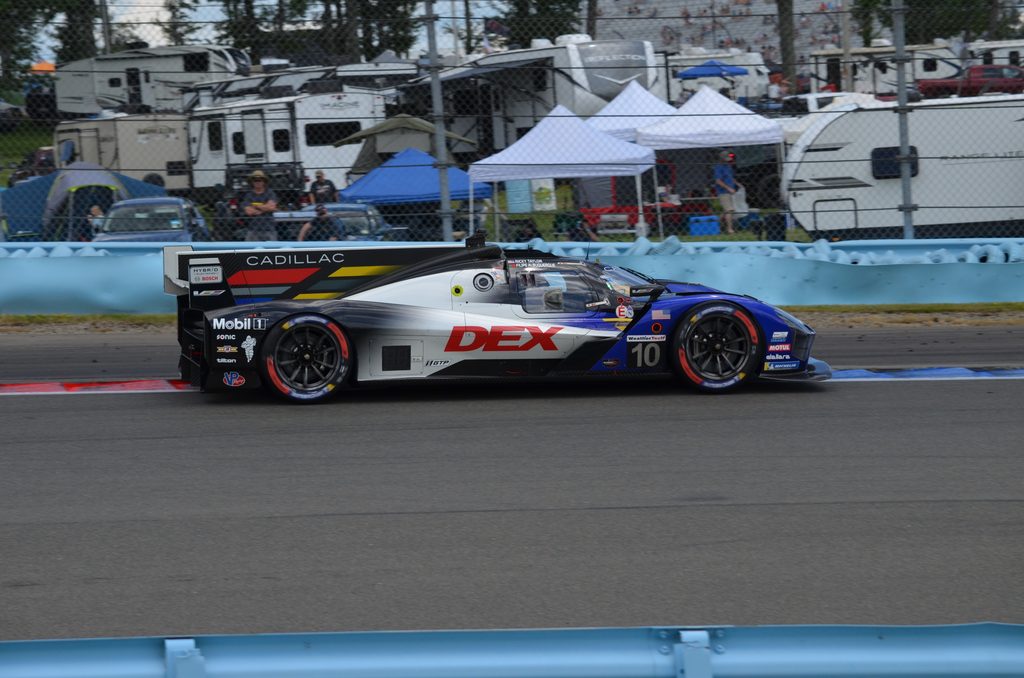
    (photo via GMnews.com)

  • Lone Star Le Mans Preview: WEC IS BACK – and It’s Going To Be STEAMY

    Lone Star Le Mans Preview: WEC IS BACK – and It’s Going To Be STEAMY

    After a month-plus away from the game, the World Endurance Championship gets back underway with the Lone Star Le Mans this weekend at Circuit of the Americas.

    As is seemingly always the concern with racing at COTA, let’s get this out of the way now and say that the weekend forecast currently calls for only some rain on Friday, while Saturday and Sunday are both projected to be partly cloudy and REAL warm with temps in the mid-90s (we all remember how last year played out in the first hour of the race when torrential rain saw the entire field plod around behind the safety car before a red flag shut things down for a bit before conditions ultimately improved).

    So as we substitute rain for insane heat, it will bring about plenty of debate for how each team will approach the race come Sunday in regards to tire wear. We’ve already seen some teams comment on their potential strategies regarding pit stop cycles of both tire changes and driver changes, because it ain’t just the tires that are going to be burning on Sunday, it’ll be the drivers, too.

    We last saw the WEC in action all the way back on July 12 down at Interlagos, with the race being conquered by the No. 15 BMW M Team WRT of Kevin Magnussen, Raffaele Marciello and Dries Vanthoor.

    Through four races thus far in the very rearranged 2026 season, we’ve seen four different Hypercar prototypes from two teams cross the finish line first — both the No. 7 and No. 8 Toyota Racing cars at Imola and Le Mans, and the No. 20 and No. 15 Team WRT cars at Spa and São Paulo.

    The Drivers’ point totals going into the race see the No. 20 BMW (Robin Frijns, Rene Rast) and the No. 7 Toyota (Mike Conway, Kamui Kobayashi, Nyck de Vries) tied on points at 75, with Team WRT taking the tiebreaker due to better podium finishes.

    Sheldon van der Linde currently holds P3 alone to himself with 65 points as a result of missing the opening round at Imola, and close behind them is the No. 51 Ferrari AF Corse of James Calado, Antonio Giovinazzi and Alessandro Pier Guidi at 57 points.

    The No. 8 Toyota (Sébastien Buemi, Brendon Hartley, Ryō Hirakawa) is P5 with 56 points, and the No. 15 BMW (Kevin Magnussen, Raffaele Marciello, Dries Vanthoor) is P6 with 50 points.

    A quick sidebar to point out – the retirement of the No. 15 from Le Mans may prove to be a championship-deciding result because things would look way different right now if Dries Vanthoor didn’t suffer that tire puncture after clipping the DKR LMP2, especially after having won pole position previously.

    For the LMGT3 side of the coin, we’ve seen a near-identical pattern play out, as four different cars have claimed class victory – the No. 69 Team WRT BMW, No. 10 Garage 59 McLaren, the No. 33 TF Sport Corvette at Le Mans, and the sister car No. 34 Racing Team Turkey by TF Sport in Brasil.

    Speaking previously of that rearranged schedule, the ongoing conflict in the Middle East resulted in the opening round in Qatar initially being rescheduled to October. Yet, as the conflict continued through the summer, we’ve now ultimately seen both the Qatar and Bahrain rounds canceled and replaced with trips to Monza and Barcelona. So, we definitely don’t blame you if you feel like this WEC season has been start-and-stop a couple of times over already.

    With four races remaining between this weekend and the finale at Barcelona on November 8, this stretch might just feel like a separate season altogether once it’s all said and done.

    An important distinction to highlight with the revised 2026 schedule is the pretty substantial decision that the FIA and ACO made in making both replacement rounds at Monza and Barcelona only six hours long, meaning the standard amount of points will be issued for each race.

    It’s a huge swing of available points in the title fights for both classes. A six-hour round awards 25 points for winning the race, 18 for finishing second, 15 for finishing third, etc. For the Qatar 1812km or the 8 Hours of Bahrain, points awarded started at 38 for the winners, 27 for second place, 23 for third, and so on.

    The decision not to extend the rounds beyond six hours was made for logistical reasons regarding the tracks themselves, other racing series that will be taking place around those times, and the weather forecast for mid-autumn in Europe.

    With fewer points now remaining on the table to be won, the importance and drama will increase exponentially for the teams in the championship hunt, never mind the teams that are currently outside looking in from a numbers standpoint. Every lap survived will be absolutely crucial, and finishing outside of the points or suffering a DNF would essentially be the end of the road for some of teams currently on the fringe of the Drivers’ championship fight, such as the No. 12 Jota Cadillac (P8/42 points) or the No. 007 THOR Aston Martin (P10/30 points).

    Free Practice 1 (12:30PM EST) and FP2 (5:00PM EST) will go down Friday, followed by FP3 (12:00PM EST) and Qualifying/Hyperpole (4:00PM EST) on Saturday.

    Green flag is set for Sunday at 2:00PM (EST)

  • The Next-Gen LMP2 Fight Is A Go – Ligier Lands Three of LMP2s Best Teams To Run the JS P228

    The Next-Gen LMP2 Fight Is A Go – Ligier Lands Three of LMP2s Best Teams To Run the JS P228

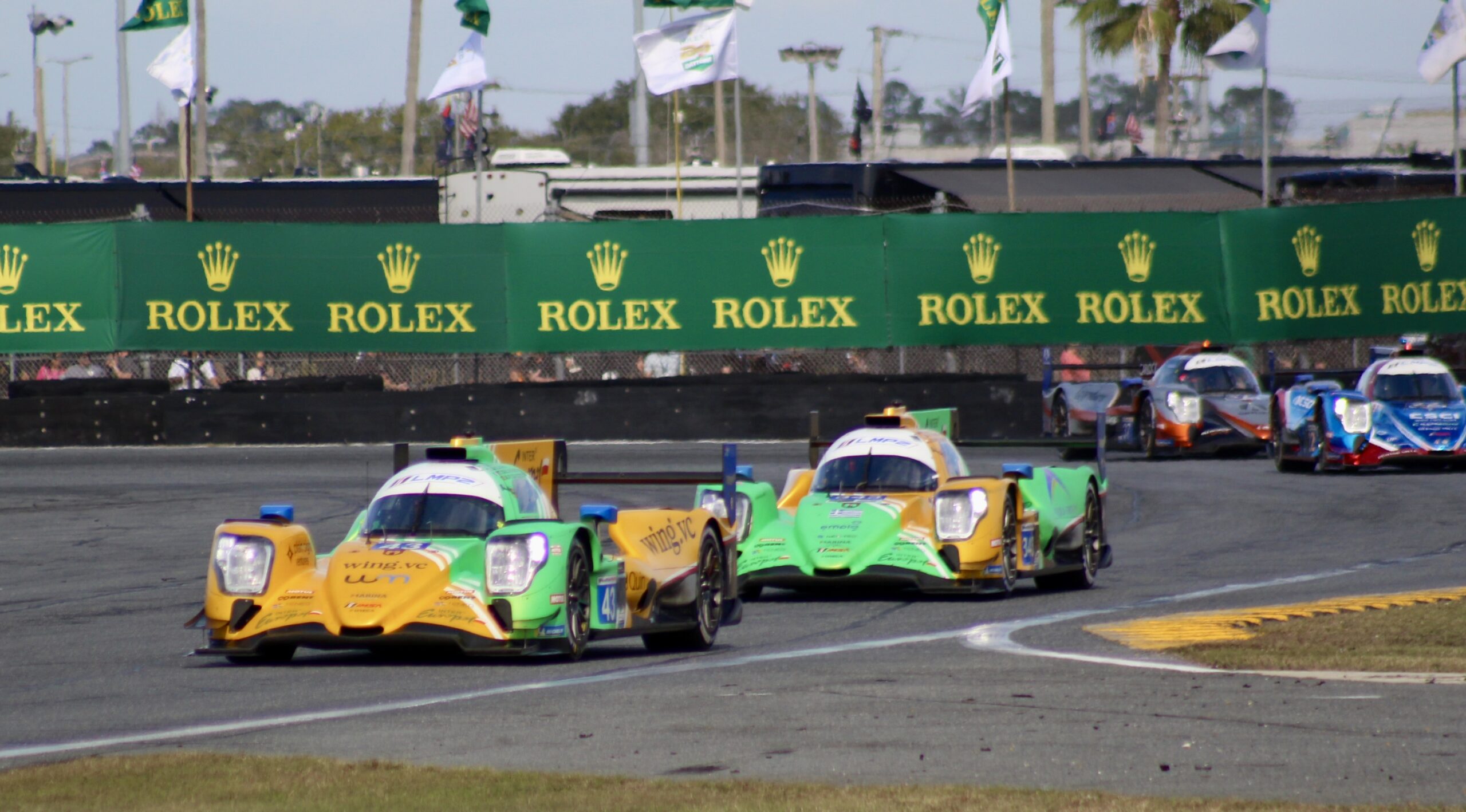
    In a major power-shifting move for the future of the LMP2 class, it was announced on Wednesday that three of the most successful teams in prototype racing today — Inter Europol Competition, Algarve Pro Racing, and Panis Racing — will all make the move from Oreca to Ligier for the launch of the new regulations ruleset in 2028.

    The duo of Ligier and Oreca are primed to be the sole providers of LMP2 hardware in the new era of the formula, and both are in continued work developing the chassis of their next generation of prototypes.

    For Ligier, the JS P228 will succeed the JS P217, while Oreca will be advancing to the Oreca 09.

    Both prototypes will make their worldwide competitive debut at the 2028 European Le Mans Series season, followed by their debut in the World Endurance Championship the same year, meaning Ligier will make it’s return to Le Mans for the first time since 2022.

    The JS P228 and Oreca 09 are set to debut in the IMSA WeatherTech series the following year in 2029, as was confirmed by IMSA president John Doonan back in June.

    The JS P228 will carry with it the ambitions of many to rebalance the competitive landscape of LMP2 after so many years of worldwide dominance in the class by the Oreca 07. For those of you that had forgotten that Ligier actually made a prototype chassis for competitive purposes, you’re definitely not alone. Both the Oreca 07 and the JS P217 launched back in 2017 to usher in the new LMP2 ruleset that is still in place to this day. Over time, due to the amazing reliability, strength of performance and overall ease of use with the Oreca 07, virtually every team competing in any of the top racing series’ in the world eventually switched over to the platform, making the Oreca 07 a dominant force and de facto choice for teams, while also leaving the JS P217 behind in the dust.

    Ligier’s last competitive victory in either the ELMS, IMSA WeatherTech Series or the World Endurance Championship came in the 2018 ELMS series at the 4 Hours of Portimao via United Autosports. Yeah, quite a while ago.

    The news of Inter Europol, APR and Panis all choosing to work with Ligier is a major shot in the arm for the future of the class, as Oreca won’t have the same sort of stranglehold it’s had in motorsport for the last half-decade, well at least at the beginning of things, at least.

    Inter Europol have rapidly blown up as one of the premier teams in all of motosports, having posted an insane four-year run at Le Mans with wins in 2023, a second place finish in 2024, and back-to-back wins in 2025 and 2026, with the most-recent triumph in ’26 also serving as a 1/2 finish along with the sister car.

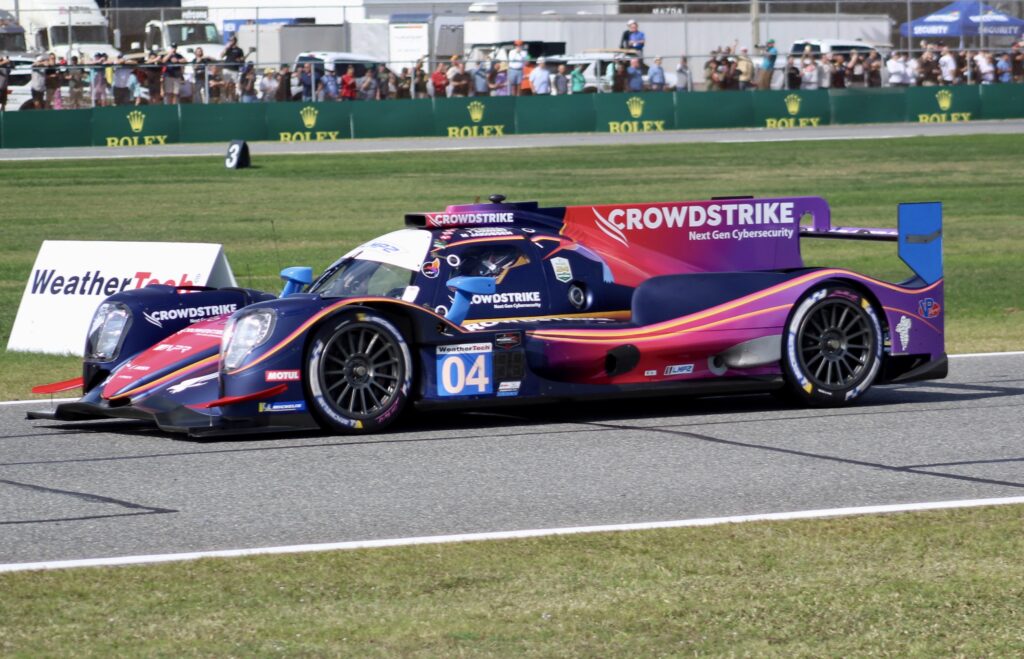
    Their success has transferred over to North America and IMSA to the tune of multiple class wins, over a dozen total podium finishes, a 3rd place finish in the standings in 2025 and a championship title in 2024. They currently sit second in the LMP2 standings with two races remaining in the season, behind only the No. 4 CrowdStrike Racing by APR – yes exactly that same Algarve Pro Racing.

    Speaking of which, APR have run in tandem with CrowdStrike at different points in recent seasons, often bouncing their name combinations back and forth depending on the year and series, but long story short both APR and CrowdStrike have found success to the tune of winning the LMP2 championship in the 2023 ELMS season, and going back-to-back in the Asian Le Mans Series in 2023-24 and 2024-25.

    Panis Racing meanwhile are the reigning ELMS champions in a joint effort with VDS Racing, which again highlights just how successful these three teams have been in recent years, making their commitment to Ligier all the more noteworthy.

    On the other side of the coin, United Autosports and Duqueine Team have already been tabbed as the first customers of the new Oreca 09, and as we move on through the next months it’ll be great to see where the remaining teams opt to lay their allegiances by the time 2028 comes aorund.

    As for the delay in getting the new prototypes to North America, IMSA President John Doonan explained the decision as a way to provide teams with additional runway ahead of the change, allowing the new cars more time to go through R&D in competition around the world before they are brought in to IMSA. For teams already facing the substantial costs associated with developing and purchasing new machinery, that extra year could prove valuable as the LMP2 enters its most significant change in more than a decade.

    For the teams that also compete in IMSA – the aforementioned group of CrowdStrike Racing by APR, Inter Europol and United Autosports – the easy guess today is to assume that those teams will run their new prototype choices come 2029. Ideally that plays out exactly as we should expect while we avoid any potential cost-cutting measures for them maybe opting to focus on the European or Asian LM series first before taking on more and more.